Indoor geolocation, the key to optimal task and team management
One of the main challenges when managing a large building is knowing all the activities that take place in it, and in real-time if possible, such as cleaning, maintenance, and security. This ability defines the daily work of the staff, contributing to more fluidity and efficiency.

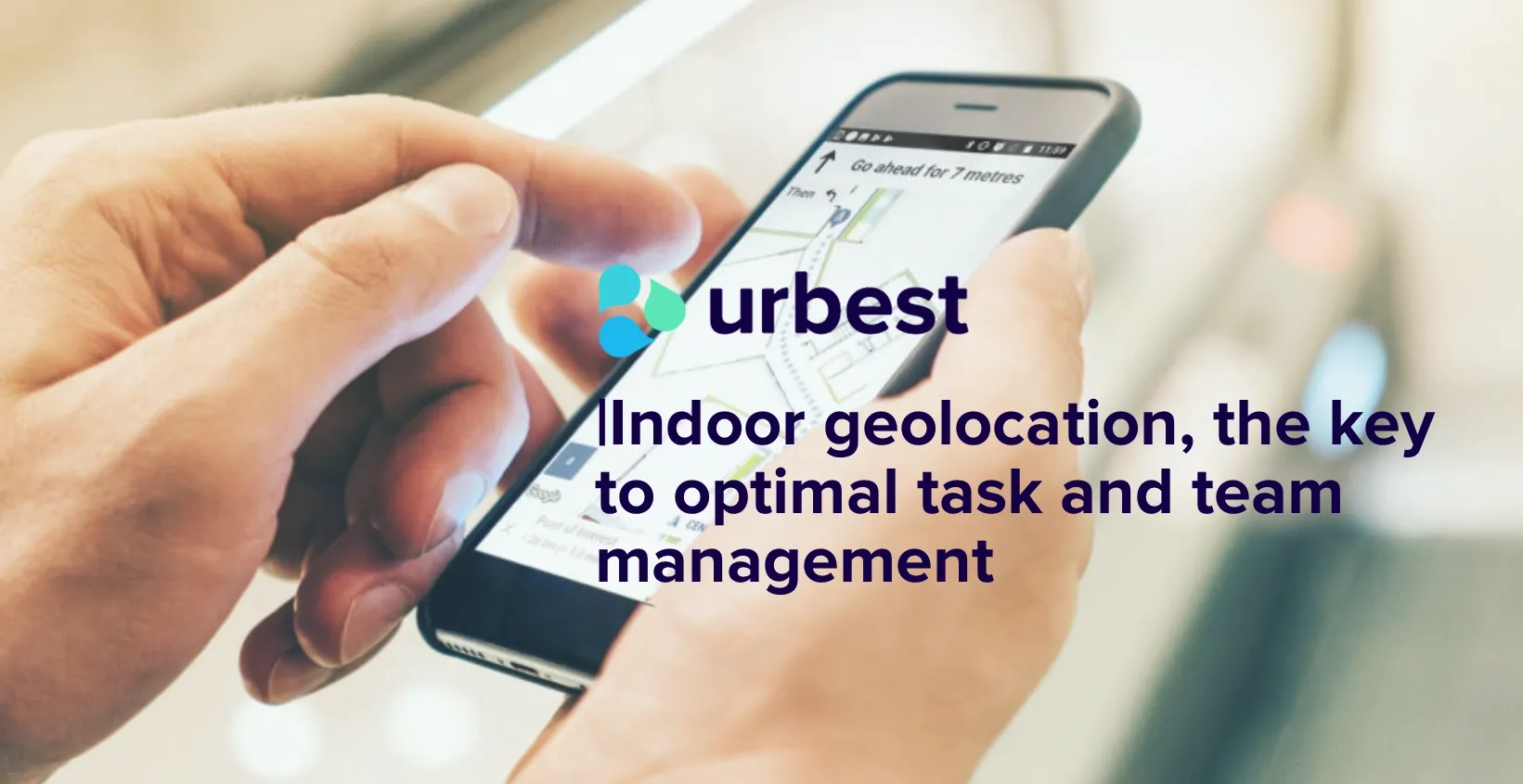
One of the main challenges when managing a large building is knowing all the activities that take place in it, and in real-time if possible, such as cleaning, maintenance and security. This ability defines the daily work of staff, contributing to more fluidity and efficiency.
The answer to this challenge can be found in an indoor location system, a valuable tool for work management and fulfilling contractual commitments. Geolocation not only helps an organisation, but also helps auditing compliance services.
When is indoor geolocation useful?
Let’s explore a few use cases:
- In the case of a security company operating in a shopping mall, for example, guards must make periodic rounds around the building. Let’s assume there was a robbery in a store at 1 PM when a guard was supposed to be there. But the store files a complaint to the mall, saying there wasn’t any security there at that time.
With a geolocation feature, it will be possible to determine if the guard was there or not. With this information, supervisors will have all the information to act if needed, whether it is with a fine or a service modification. In some cases, geolocated data can be used to avoid fines to justify a service, saving even thousands of Euros in a single trimester.
- Another standard use case is cleaning teams. If a chemical laboratory, for example, deals with toxic chemicals, the cleaning teams need quite a strict schedule to clean after lab employees, so everything is kept safe. If there's an intoxication case related to contact with a toxic element, the company needs to make sure the area has been cleaned. In this case, the geolocation feature will confirm if the cleaning staff was indeed there for the specified time. Combining this geodata with task management, the supervisor can know whether the service was completed or not and act accordingly.
- In other cases, in industrial environments, there are cleaning machines or vehicles. A supervisor may need to know the path these assets take. Why? The client doesn't know, and only through geolocation can we know this mandatory input in-depth to determine if the service is being fulfilled.
Locating inside a building without GPS?
Geolocation is already present in many areas of our lives. Once we have adapted to the use of GPS outdoors, the remaining question is how to geolocate indoors.
Answering this question, a location system that works inside buildings is able to work as an indoor GPS. And, among other uses, can be used for the management of work teams, with minimal dedicated infrastructure and fast deployment. This technology can achieve a full view of service-related operations, including tasks, rounds, and location history.
Management of mobile work teams and their activity through indoor geolocation
In large indoor spaces such as multi-floor office buildings, effectively managing mobile work teams requires strong operational visibility.
Workers move across wide areas, often through zones with limited connectivity. Under these conditions, real-time geolocation becomes critical for knowing where each team member is, responding quickly to unforeseen events, and reallocating tasks when needed.
- Some of these spaces are also combined with outdoor zones. With this geolocation feature, you can cover both environments within the same dashboard, with a smooth transition between indoor and outdoor areas.
- Many of these workers perform rounds and tasks regularly. Therefore, managing their routes is essential throughout the process to check service fulfilment. The best way to achieve this is with geoanalytics, i.e., graphics, heatmaps, step-by-step trajectories, and reports that contribute to transparency.
- This need for precise operational visibility is also why many organisations use complementary tools such as GPS-based time-tracking tools like Workyard’s solution to monitor staff movements and on-site activity more reliably.
- Other technologies often lack reliability: checklists can be completed or codes scanned using stored photos, without any proof that the user was actually on-site. For auditing purposes, organisations need certainty that each task was carried out at the right place and time. A geolocation feature is the only way to provide this level of verification and generate trustworthy analytics.
Given these circumstances, it is essential to have an organisational system that goes beyond paper records or overly complicated software that lacks real-time or location-based information.
Geopositioned patrols and tasks for efficient and transparent management
Usually, all the workers who move around a large building make rounds: checking hot spots for the safety of the building, carrying out occasional or periodic cleaning or maintenance work, etc.
With this geopositioned patrols feature, collaborative platform for services such as Urbest provides a complete system that allows you to customise different parameters:
· Name and description of the round to be performed.
· The number of daily runs required.
· Identify checkpoints for the worker to pass through, the frequency, and order.
Meanwhile, geopositioned tasks are another of the functions that indoor geolocation provides:
· Configure all types of tasks to be performed in the building.
· Select which team members should perform them, how often, and of course, the precise location where they should be performed.
· Visualise the tasks performed, but also the pending ones and their status.
To sum up, this indoor location technology and its features provide new tools to organise, understand, and analyse the activity performed by your staff that takes place inside buildings.
Indoor geolocation is not only a management tool but also an auditing and transparency device. It allows us to check and justify service compliance and thus avoid fines, and boost customer renewal and satisfaction. This ultimately translates into an increased efficiency and, therefore, also in the final profit.